

Welcome!
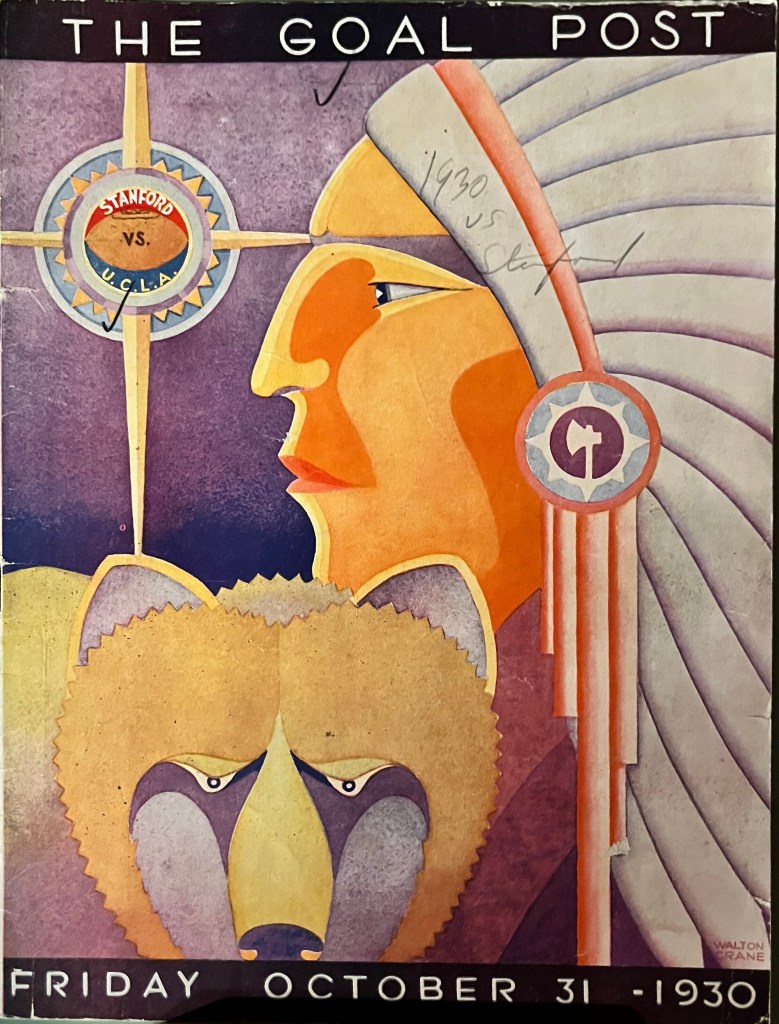
The Goal Post became the “Official Souvenir Program” of UCLA football beginning with the 1931 football season. But The Goal Post was first used by UCLA as the title for its football magazine during the 1930 season. And if you look at volume numbers in later editions, these 1930-season programs we not included. This is a Treachery of Images which was first taught to me by Lyman Hong in my second year at El Camino College – my own first run in college before settling into my “official” UCLA experience.
The Treachery of Images is compelling because we all intrinsically know that we believe what our lying eyes tell us everyday. That is, we approximate, estimate, conflate, stereotype, and bury our heads in order to accept the simplicity of what our brains translate from the fragments of images constantly streaming past our eyes. If there was ever a theme to my dad’s stories, it’s that there is always a story, no matter how simple things appear. It’s a mindset – don’t seek to know, seek understanding. Dig past the surface because the superficial lessons become meaningless very quickly. Or ya know, “don’t judge a book by its cover.”
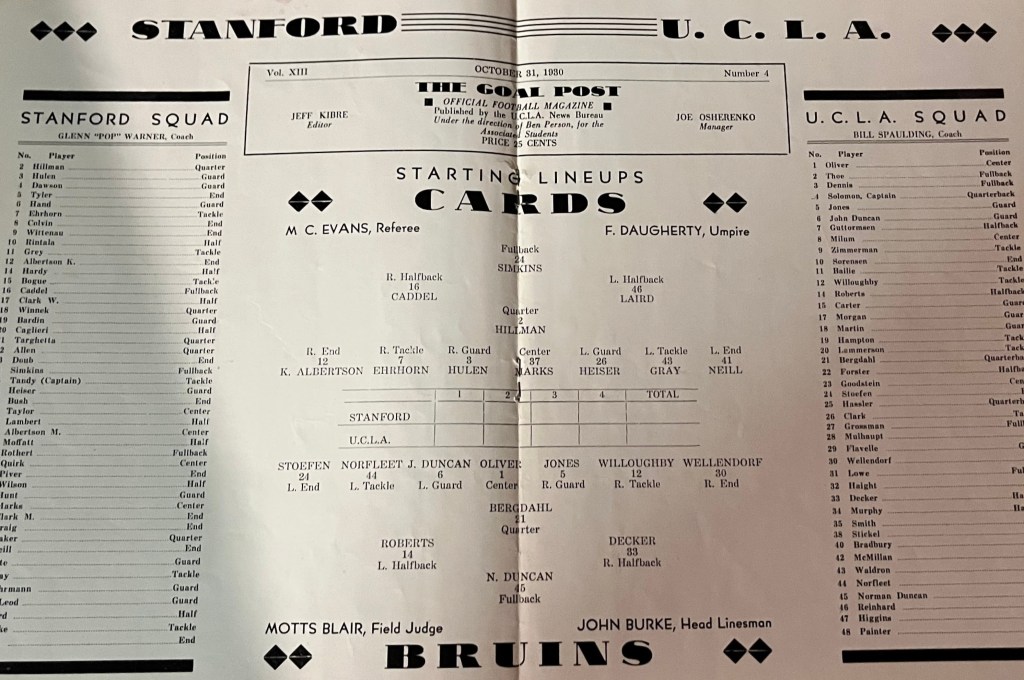
And so, like Dad, I will start with the source materials in my chronicles of the The Goal Post, and this magazine, entitled The Goal Post and sold at the LA Colosseum on Halloween 1930 to commemorate only the fourth meeting between Stanford and UCLA.
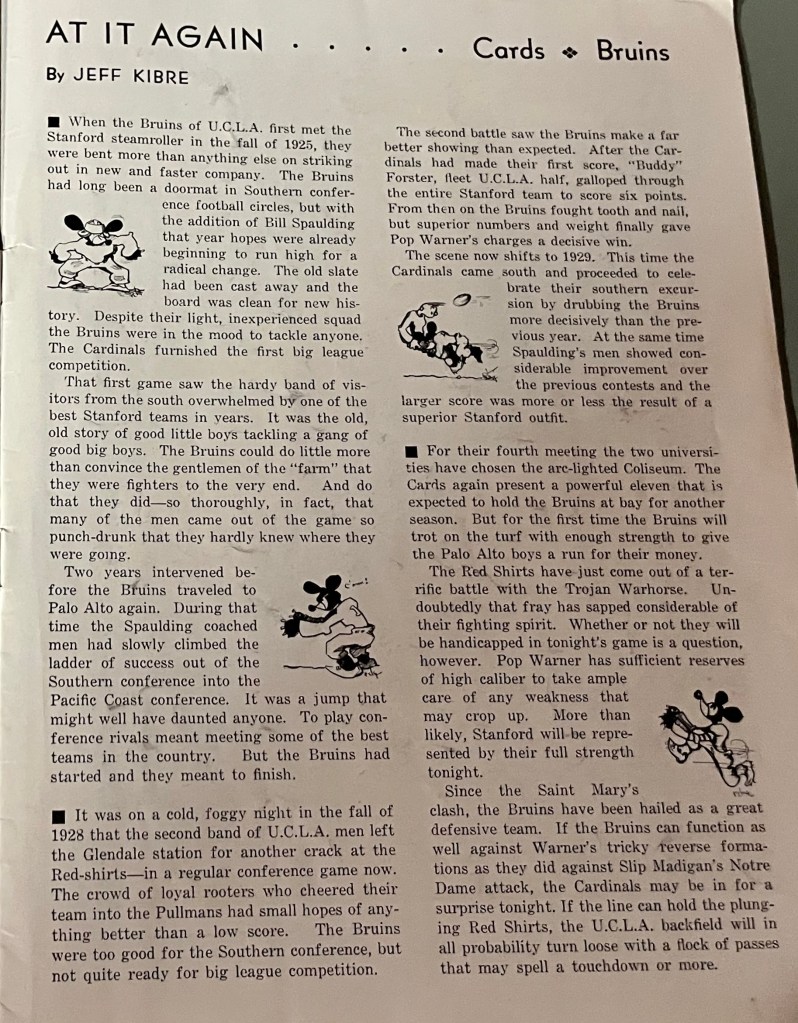
In 1930, Stanford was a “steamroller” but they were not officially the “Indians” until the last game of this 1930 season against Dartmouth, when the student body voted Indians ahead of other nicknames, the “Cardinals” (yes, with an “s”) or the “Cards.”
The passage above captures the entirety of the UCLA-Stanford rivalry to that point, wherein the national powerhouse in Palo Alto was 3-0 leading into this fourth contest against the still-upstart Bruins. 100 years after the first meeting between these teams in 1925, UCLA now leads the series 49-43-3. And like all California former PAC-anything teams, I hold a special place for Stanford in my heart – mostly contained within the dark and decayed portions of my left ventricle. Dad would always tell me about his first UCLA football game he went to on October 16, 1954 when UCLA routed the then-hapless “Indians” 72-0 (see my first post). I was at the Rose Bowl in 2000 when the Stanford Tree disrupted a UCLA cheerleading stunt and was promptly pile-drived by a male UCLA cheerleader. And of course, I was there as UCLA seemed headed toward its first victory over Stanford in eight seasons when my wife asked me the calorie content of iced coffee just as Stanford drove toward our seats in the end zone to spoil the upset and spoil any hopes I had that my wife might become a football fan.
But back to 1930…
On Pop Warner
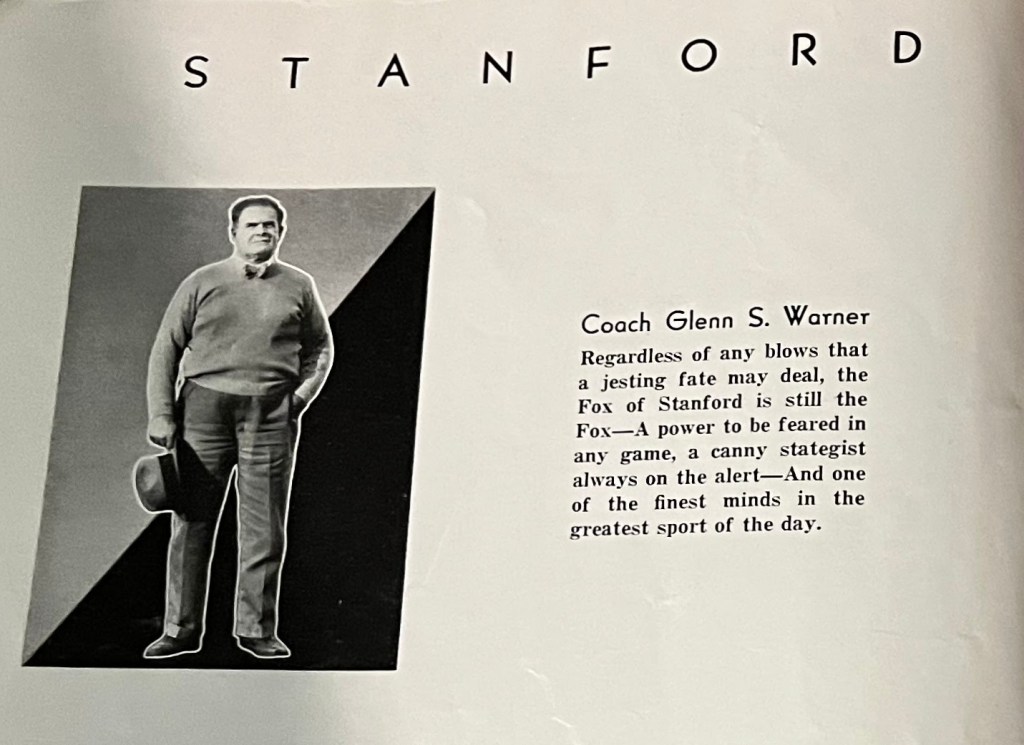
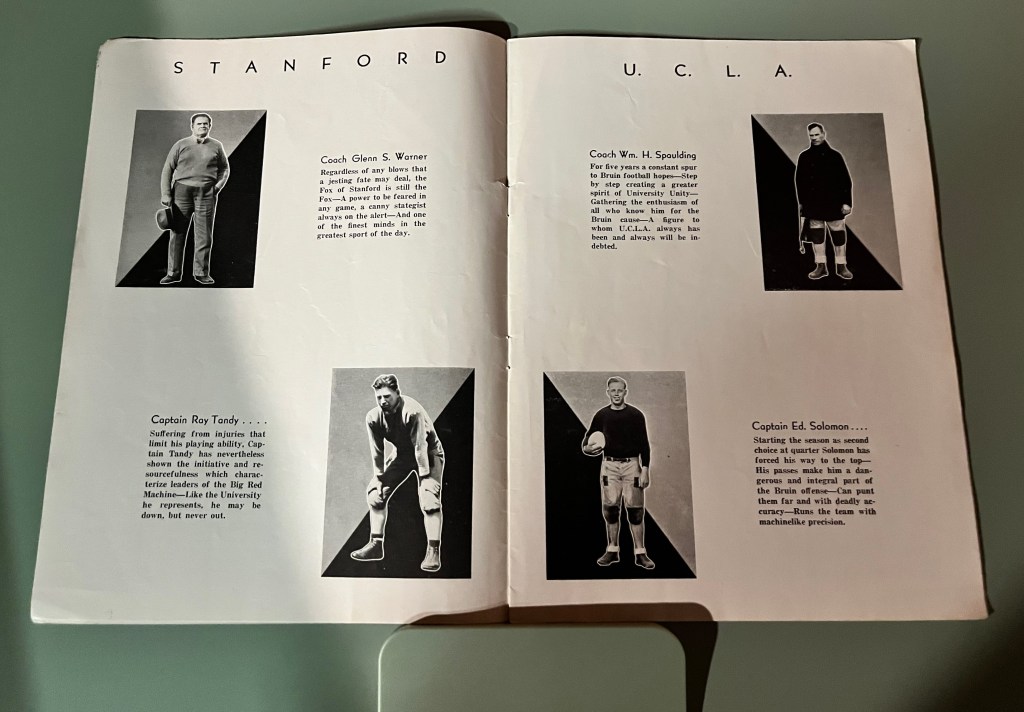
And in 1930, the Cards were coached by the “Pop” (Glenn) Warner. No, not just the namesake for American youth tackle football, but one of the great early minds and coaches of college football. Pop Warner won a national championship at Stanford in 1926 after winning three more at the University of Pittsburgh prior to 1920.
Regardless of any blows that a jesting fate may deal, the Fox of Stanford is still the Fox – A power to be feared in any game, a canny strategist always on the alert – And one of the finest minds in the greatest sport of the day.
Inversely to my own route, Pop Warner sought a legal career and wound up in football when he was essentially ordered to play guard while attending Cornell Law School (think that’s weird? he also played after graduating.) Despite never playing football growing up, Warner eventually became captain, and later coach of the Cornell football team. Warner compiled a career college football coaching record of 319–106–32, which at the time of his retirement made him the winningest coach in history.
And back to the game


Despite optimism that the Bruins finally had the size and strength to compete with the “Farm,” UCLA did indeed succumb for the fourth consecutive time to remain winless against Stanford, a streak that would not be broken until 1932. Stanford remained a power against UCLA and within college football throughout the 1930’s. But just as the world and history were transformed by the Second World War, so was the landscape of college football, like all aspects of American life.
By 1930 Stanford had been fielding a college football team for nearly 40 years. Stanford had played in the inaugural Rose Bowl Game in 1902. And, as noted above, Stanford had already claimed a national championship for the 1926 season, an undefeated season that did, however, end in a tie against Alabama. And we all know how the Crimson Tide has turned.
Indeed, Stanford won its second and only other national championship in 1940 before canceling three football seasons in the 1940’s due to WWII. The Indians, nor the Cardinal, would never again fully regain the glory of early Stanford football.
In 1926, “UCLA” was still called the Southern Branch of the University of California. The team was called the “cubs” or the Grizzlies, which they had to change in 1926 when the newly-minted “Bruins” joined the Pacific Coast Conference (“PCC”) with Stanford and the other western powers, including the University of Montana which was already called the Grizzlies, and apparently repeat mascots was frowned upon (I am looking at you, teams called the wildcats!). Coming from the lowly ranks of California small and upstart college football teams in the Southern California Intercollegiate Athletic Conference (“SCIAC”), Southern Branch was in no position to bully the mighty Montana – still a power in FCS and still the Grizzlies!
By 1927, Southern Branch officially became UCLA and a new campus was being built on the west side. By 1929, UCLA had moved onto its brand new Westwood home and by 1930, the Bruins were starting to resemble something of a competitive football team, still a relative “cub” among the other mighty programs in the West.
Since then, Stanford has remained an enigmatic fixture in college football, periodically flirting with greatness and home to some great quarterbacks, among a long history of mediocre to bad football, strange band play, and the most annoying mascot in all of college football. Perhaps the biggest change from then, is that sadly the Cardinal are no longer conference rivals for the Mighty Bruins and the future of this historical football series is uncertain.
As for UCLA? Well, next up we have two volumes of The Goal Post to review from 1931.
Shout-out to my old friend Michael Okwo and former high school teammate, Josh Catron, who both played at Stanford in the 2000’s and were part of the early resurgence of Stanford football under Jim Harbaugh.
OBGP.0001
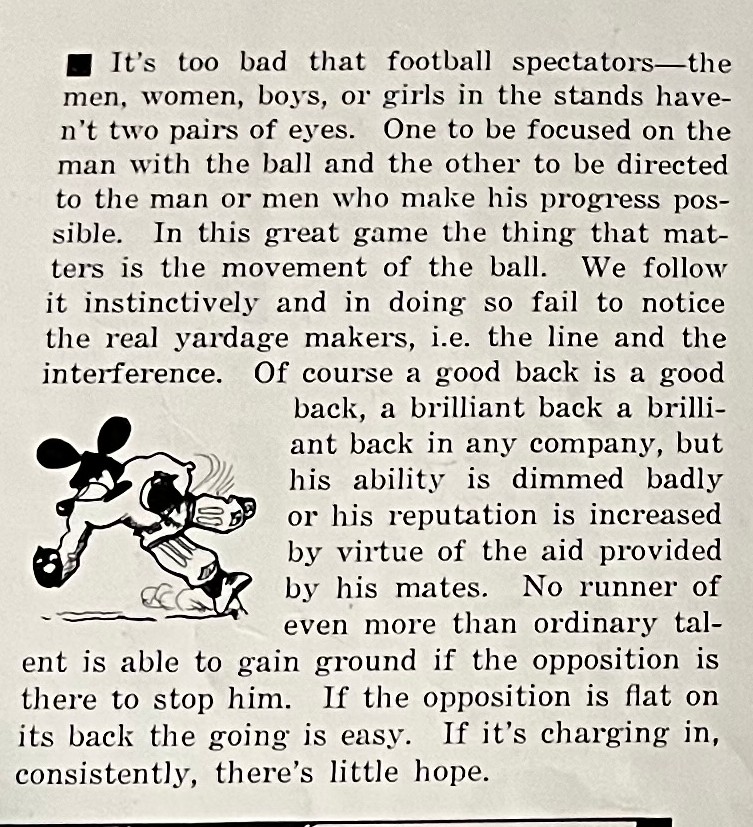
Fine sports writing in 1930 highlighting the necessity for good line play for success on the grid iron.
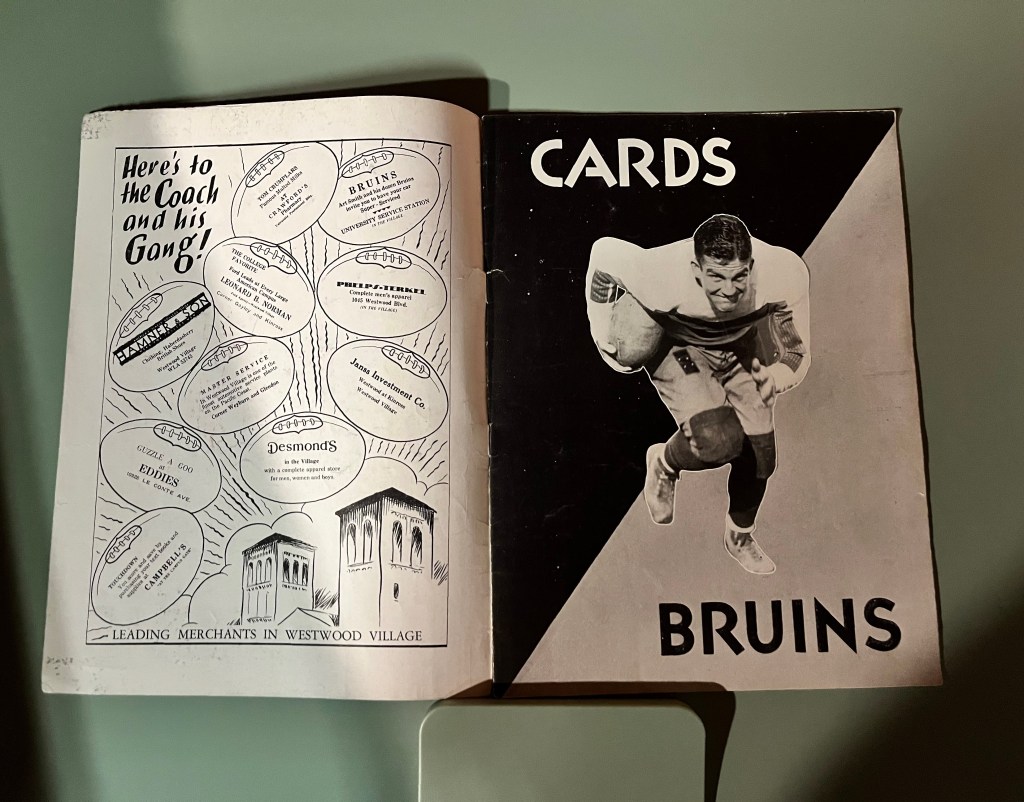
Please note reference to the “Cards” not Cardinal. In other portions, Stanford is referred to as the “Cardinals.”
“Leland Stanford Jr. University. I’ve heard of Junior College, but this is the only Junior University I have ever heard of.” – Hon. Dennis Keough, Superior Court of California, Orange County.
 #obgoalpost
Leave a comment